">
News briefs:April 28, 2005
August 2nd, 2020 | Uncategorized |
No Comments
">
Latest trial of the One Laptop Per Child running in India; Uruguay orders 100,000 machines
August 2nd, 2020 | Uncategorized |
Thursday, November 8, 2007
India is the latest of the countries where the One Laptop Per Child (OLPC) experiment has started. Children from the village of Khairat were given the opportunity to learn how to use the XO laptop. During the last year XO was distributed to children from Arahuay in Peru, Ban Samkha in Thailand, Cardal in Uruguay and Galadima in Nigeria. The OLPC team are, in their reports on the startup of the trials, delighted with how the laptop has improved access to information and ability to carry out educational activities. Thailand’s The Nation has praised the project, describing the children as “enthusiastic” and keen to attend school with their laptops.
Recent good news for the project sees Uruguay having ordered 100,000 of the machines which are to be given to children aged six to twelve. Should all go according to plan a further 300,000 machines will be purchased by 2009 to give one to every child in the country. As the first to order, Uruguay chose the OLPC XO laptop over its rival from Intel, the Classmate PC. In parallel with the delivery of the laptops network connectivity will be provided to schools involved in the project.
The remainder of this article is based on Carla G. Munroy’s Khairat Chronicle, which is available from the OLPC Wiki. Additional sources are listed at the end.
No Comments
">
Monday, June 23, 2008
2008 COMPUTEX Taipei, the largest trade fair since its inception in 1982, featured several seminars and forums, expansions on show spaces to TWTC Nangang, great transformations for theme pavilions, and WiMAX Taipei Expo, mainly promoted by Taipei Computer Association (TCA). Besides of ICT industry, “design” progressively became the critical factor for the future of the other industries. To promote innovative “Made In Taiwan” products, pavilions from “Best Choice of COMPUTEX”, “Taiwan Excellence Awards”, and newly-set “Design and Innovation (d & i) Award of COMPUTEX”, demonstrated the power of Taiwan’s designs in 2008 COMPUTEX Taipei.
byAlma Abell
If you own a business, and your business is permitted to contract private trash removal rather than having to rely on municipal services and if your business is in the Rochester, New York area, you’re going to find that there are a number of different trash removal services to choose from. However, not all trash removal services offer the same sorts of benefits that others do. What this means is you’re going to have to be a bit more attentive to the different services that are offered in order to find the right services to provide you with Trash Removal in Rochester, NY.
Today, there is more of an emphasis on protecting and helping the environment. Regardless of how you feel about the impacts of man-made global warming, most people will concede that it’s good to be as good to the environment as possible. One of the ways you as a business owner can do this is use recycling services for some of the waste that your business produces. While not all trash removal services offer recycling, many do and some do to a great extent. That’s why if you’re looking for creative ways to recycle, you’ll need to find trash removal in Rochester NY that can facilitate any and all of your desires to recycle the waste that is created by your business.
You’ll also want to look for a company that has an excellent record of collecting garbage on a timely basis. If a company says they’re going to be there at a specific time at a specific date, you want to ensure that they are there on a regular basis. The company that sets times for trash pickup but fails to meet them on a regular basis may not be the type of trash removal company you want to contract with. That’s why you want to do a little research and find the most reliable trash collection services and these will be the services you’ll want to consider using.
If you like to recycle, you’ll need to look for a trash removal company that offers a wide variety of different recycling options. If you want quality service, you’ll need to look for companies that are known for that. However, with a little bit of patience, you should have no problem finding the right trash removal service.
Thursday, December 20, 2012
Recently, Wikinews spent time with with Canadian Paralympic skier Vanessa Knight who was at Copper Mountain, Colorado for the IPC Nor-Am Cup.
((Wikinews)) We’re interviewing Vanessa Knight, who’s from Canada.
-
-
Vanessa Knight: That’s right!
((WN)) And what kind of skier are you?
-
-
Vanessa Knight: I am a disabled racer. I have a left arm amputation and I’m a speed skier.
((WN)) So you’re one of the standing skiers.
-
-
Vanessa Knight: Yes.
((WN)) I’ve been asking a lot of Paralympic disability skiers, what is the craziest skier of the slope? The standing ones, the blind ones, or the mono skiers?
-
-
Vanessa Knight: Oh my God, the blind ones for sure. I couldn’t imagine throwing myself down a hill without seeing anything. Especially the B1s. They have duct tape on their goggles.
((WN)) Where from Canada are you from?
-
-
Vanessa Knight: I’m from Quebec. Montreal.
((WN)) And how long have you been skiing?
-
-
Vanessa Knight: I’ve just entered my fourth year.
((WN)) And are you going to Sochi?
-
-
Vanessa Knight: I hope so!
((WN)) Are you going to beat… oh! Australia doesn’t have any skiers for you to beat. Do you think the level of competition for women’s disability skiing is high enough to give the sport a future?
-
-
Vanessa Knight: I think the level of competition is high enough, yes. But I still think we need more racers and people to get involved and really promote the sport, because, I mean, the more the merrier, right?
((WN)) Why are there so many men in skiing compared to women?
-
-
Vanessa Knight: I guess some girls are just scared and they don’t want to throw themselves out there. But I’m not like that and neither are the rest of the girls here. They’re not afraid to throw themselves down a hill and go fast.
((WN)) Do you think skiers are some of the craziest Paralympic athletes?
-
-
Vanessa Knight: Oh definitely.
((WN)) Is there anything you want to say about disability skiing in Canada that people in Australia or the world should know?
-
-
Vanessa Knight: Pretty much to say: It’s really cold in Canada. And we love it!
Tuesday, April 22, 2014
Coinciding with Easter Sunday, Glasgow Cannabis Social Club’s annual 420 event was held on Glasgow Green, under sunny blue skies, and overlooking the river Clyde. Despite the city’s council attempting to revoke permission for the gathering at the last minute, police were happy for it to go-ahead with approximately a dozen officers attending in high-visibility vests.
- 1
- 2
- 3
- 4
- 5
- 6
- 7
- 8
- 9
- 10
- 11
- 12
- 13
- 14
- 15
- 16
- 17
- 18
- 19
- 20
- 21
The Daily Record reported five arrests were made for minor offences, likely smoking and possession of small quantities of cannabis. Taking a less-sensational — and more accurate — line of reporting, the Monday edition of Glasgow’s Evening News stated five were referred to the Procurator Fiscal who is responsible for deciding if charges should be brought.
Official figures provided by the police were that 150 attended. With people coming and going, Wikinews reporters estimated upwards of 200 attended, compared to nearly 700 who had signed up for the event on Facebook. Hemp goods were advertised and on sale at the event, and some attendees were seen drinking cannabis-themed energy drinks.
“I was searched and charged under the Misuse of Drugs Act (which is a lot of bollocks)” one attendee noted online, adding “not fair to happen on a brilliant day like it was, other than that I had a great day!” A second said they were openly smoking and ignored by police, who “were only really focusing on people who looked particularly young”.
Cannabis seeds were openly and legally sold at the event and a hydroponics supplier brought a motortrike towing an advertising trailer. Actually growing cannabis is, however, illegal in the UK.
With the event openly advocating the legalisation of cannabis, speakers put their arguments for this to a receptive crowd. Retired police officer James Duffy, of Law Enforcement Against Prohibition, spoke of the failed United States alcohol prohibition policy; stressing such policies needlessly bring people into contact with criminal elements. Highlighting other countries where legalisation has been implemented, he pointed out such led to lower crime, and lower drug use overall.
One speaker, who produced a bottle of cannabis oil he had received through the post, asserted this cured his prostate cancer. Others highlighted the current use of Sativex by the National Health Service, with a cost in-excess of £150 for a single bottle of GW Pharmaceuticals patented spray — as-compared to the oil shown to the crowd, with a manufacturing cost of approximately £10.
Similar ‘420’ pro-cannabis events were held globally.
Monday, April 25, 2005
With two space walks, 78 million miles and six months on board the International Space Station under their belts, Commander-Science Officer Leroy Chiao and Flight Engineer Salizhan Sharipov, the station’s 10th crew, landed in Kazakhstan in a Soyuz spacecraft at 6:08 p.m. EDT Sunday.
Also returning was European Space Agency Astronaut Roberto Vittori of Italy, who launched to the Station with the Expedition 11 crew and spent eight days doing experiments. He was aboard under a contract between ESA and the Russian Federal Space Agency.
The re-entry of the ISS Soyuz 9 spacecraft was perfect, returning the astronauts to Earth 53 miles northeast of the town of Arkalyk after 192 days, 19 hours and 2 minutes in space for the Expedition 10 crew. The recovery team reached the capsule in minutes.
They launched from the Baikonur Cosmodrome in Kazakhstan last Oct. 13 at 11:06 p.m. EDT. During their increment they performed two spacewalks, continued station maintenance and did scientific experiments.
Notable accomplishments included replacing critical hardware in the Joint Quest Airlock; repairing U.S. spacesuits; and submitting a scientific research paper on ultrasound use in space. Chiao was also the first astronaut to vote in the U.S. Presidential election from space. The crew completed two spacewalks, including experiment installation and tasks to prepare the Station for the arrival of the new European Automated Transfer Vehicle next year.
Aboard the Station, Commander Sergei Krikalev and Flight Engineer and NASA Station Science Officer John Phillips, the Expedition 11 crew, are beginning a six-month mission. It will include the resumption of Space Shuttle flights and two spacewalks from the Station. Expedition 11 is scheduled to return to Earth on October 7, 2005. The two latest occupants of the station launched with Vittori from Baikonur April 14.
Krikalev and Phillips will have light duty for the next two days, as they rest after completing a busy handover period. For the past week, they have been learning about Station operations from the two men who called the ship home since October. Chiao and Sharipov briefed Krikalev and Phillips on day-to-day operations and gave them hands-on opportunities at Station maintenance. Chiao and Phillips restored the Quest airlock to working order for future spacewalks and practiced operating the Canadarm2 robotic arm.

By Doug Smith
What Is A Hobby?
Ask 10 different people what a hobby is, and you will no doubt get 10 different answers. It is also possible that all 10 answers are correct! Several factual sources were consulted to define a hobby.
Links to dozens of free and informative hobby sites appear at the conclusion of this article.
The library dictionary defines a hobby as “a pursuit outside one’s regular occupation engaged in for relaxation.”
An online dictionary calls it “an auxiliary activity (synonyms: avocation, by-line, sideline, spare-time activity).”
A popular online encyclopedia gives this definition: “a spare-time recreational pursuit.”
A hobby is therefore an activity you perform in your spare time for pleasure or relaxation. However, none of those definitions say anything about money.
[youtube]http://www.youtube.com/watch?v=laPShxELssA[/youtube]
How Much Is Your Hobby Costing You?
You will have to spend some amount of money in order to enjoy most hobbies. If you collect coins, you have to spend paper money in order to gather enough change to collect. A funny headline collection requires a newspaper subscription. Even cloud watching might have expenses if you choose to photograph your subjects and collect the pictures in albums.
The title of this section, however, is not meant to inquire about the cost of performing your hobby. Instead, it is meant to spur you into looking deeply at your hobby to see if any money-making opportunities exist.
Perhaps you are performing your hobby in a unique way that could benefit others with the same interest. The internet makes it easy to compile your hobby secrets into an information product and offer it for sale.
How To Uncover Your Special Opportunity
The number and types of hobbies are as varied as the number and types of people who perform them. A comprehensive list of profit opportunities in hobbies is simply not possible.
However, here are three examples of how you can start looking for hidden income in your hobby.
1. A hunter decides to raise hunting dogs. This breed of dog excels at hunting squirrels, but is known for its poor performance in identifying other small game as prey. One day, while leaving the hunting section of the local department store, he cuts through the toy section.
The collection of stuffed forest animals gives him an idea. He buys a collection of small stuffed forest animals and a bottle of squirrel scent. Soon his dogs are hunting all kinds of prey like champions. He receives hundreds of requests for more information after he posts his success on a popular online hunting forum.
This is a perfect opportunity to write a how-to e-book about training this breed of dog to hunt more than squirrels. There is obviously a niche market rabid for this information. He could also start a paid membership forum to complement his e-book.
2. A college student graduates and enters into a job market that is highly competitive with a high turnover rate. After each successive layoff due to downturns in the industry, she is forced to upgrade her resume over and over again in order to re-enter the same industry.
Friends and family begin asking her for help with their own resumes, and are successful with the resumes she writes for them. Everyone hates writing resumes, so this is an excellent opportunity for a part-time resume writing business.
3. A cat owner notices his cat’s natural tendency to enter small, dark spaces. He incorporates the cat carrier into his cat’s play time, and soon has his cat is trained to enter the cat carrier almost on command. Anyone who has tried to shove a terrified cat into a cat carrier for a vet trip would gladly pay for this secret.
How Do You Get Started?
Examine your hobby as described earlier. Do people always ask you about it? Do they need help getting started with the same activity? Do your friends tend to invite you over only when there’s a problem with their computer or car?
If you answered yes to any of those questions, there might be untapped money hidden in your hobby. All you have to do is think of a way to package and sell your knowledge.
For More Information
If you need hobby ideas or want to research hobbies related to yours, you can use the links appearing at the end of this article.
About the Author: Doug Smith provides free
hobby crafts
information at
HobbyBoutique.com
. Click now to visit the free hobby info center. (C) 2006 by Doug Smith. Reprint if no changes and links are clickable.
Source:
isnare.com
Permanent Link:
isnare.com/?aid=49947&ca=Arts+and+Crafts
18 December 2004
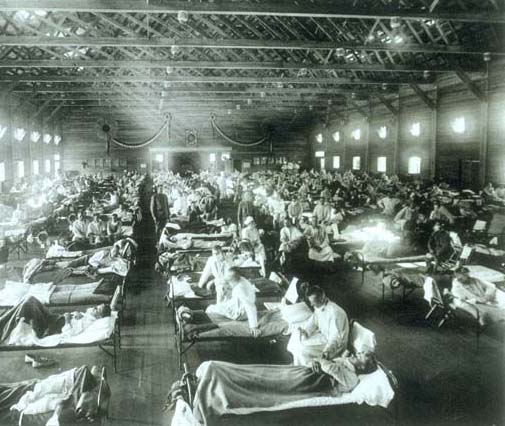
Emergency hospital during 1918 influenza epidemic, Camp Funston, Kansas (source: National Museum of Health and Medicine, AFIP).
A bout of the flu can be mild. In young, healthy adults, many infections pass unnoticed. But sometimes the influenza virus evolves into a strain that decimates its victims. The worst known strain swept the world in the Fall of 1918, infecting 500-1000 million and killing 40-100 million, about 2-5% of people.
There are several theories about where the pandemic began, but the likeliest origin was in Haskell County, Kansas, in the United States. People in the sparsely populated county, where farmers raised pigs, poultry, cattle, and grain, began suffering from influenza in late January 1918. Unusually for flu, it was young, healthy adults who were hardest hit. Victims fell ill suddenly, many progressing to pneumonia and dying, often within days. Within weeks, however, the epidemic ended. The natural geographic isolation of this community normally might have contained the fatal flu in a sort of unintentional quarantine, but the First World War intervened. Men were uprooted from their home towns and congregated in huge numbers in army camps for training and then shipping out to other camps or to fight in Europe. The destination for men from Haskell County was Camp Funston, part of Fort Riley, Kansas, where the first influenza case was reported in early March. As soldiers moved among camps, the virus spread. Within two months, the epidemic spread to most of the army camps and most of the largest cities in the United States. As American soldiers went to France, so did the virus, spreading first from the port of Brest.
The flu then spread worldwide. The pandemic reached its height in the Fall of 1918. Spain was affected early, and because Spain was not fighting in the World War, there was no wartime censorship, and news of the outbreak became widely known, leading to the flu being called the Spanish Flu in many countries. In Spain, however, it was called French Flu or the Naples Soldier. In India, about 12 million people died of flu. In some US cities, people died so quickly that morticians couldn’t cope with the bodies. According to Jessie Lee Brown Foveaux, who worked in the Fort Riley laundry during the epidemic: “They were piling them up in a warehouse until they could get coffins for them.”
The disease started with cough, then headache. Temperature, breathing and heart rate increased rapidly. In the worst cases, pneumonia came next, the lungs filling with liquid, drowning the patients and turning them blue from lack of air. Patients bled from every orifice: mouths, noses, ears, eyes. Those who survived often suffered temporary or permanent brain damage. Several million developed encephalitis lethargica, in which victims were trapped in a permanent sleeplike and rigid state, as portrayed in the 1990 movie “Awakenings.” In others, normal thought processes were impaired. During negotiations to end World War I, US President Woodrow Wilson was struck with flu, and people around him noted that his mental abilities never fully recovered. The French leader George Clemenceau had wanted harsher punishment of Germany than Wilson had desired. Clemenceau may have convinced Wilson in his weakened state to accept such harsh terms, which may have been one of the factors causing World War II.
Since flu is highly contagious early in the illness, even before symptoms appear, strict quarantine may be necessary to stop its spread during an epidemic. Australia kept its 1918 flu death rate relatively low by enforcing quarantines. However, in many parts of the world, public health officials hesitated to impose such measures, giving the disease time to gain a foothold. In the US city of Philadelphia, a rally of half a million people was planned in September 1918 to sell bonds to fund the war, at just the time when the flu started to infect residents. Although doctors warned the public health director to cancel the rally, he wanted to meet the city’s quota to raise money for the war and refused to cancel the event. Within days after the rally, half a million city residents caught the flu.
Why was the 1918 flu so deadly? The influenza virus wasn’t preserved at the time of the outbreak, at least on purpose. But in the late 1990s researchers Ann Reid, Jeffery K. Taubenberger, and their colleagues extracted and sequenced the genetic material of the virus, RNA, from tissue of victims who died in the pandemic. They used bits of lung that were preserved in formalin from victims on army bases or from victims buried in permafrost in the Alaskan village of Brevig Mission, where flu killed 85% of adults. Comparisons with known flu viruses in humans, pigs, and birds suggest that some genes of the 1918 virus came from birds or an unknown animal source. Other scientists then were able to show that the amino acid sequence of hemagglutinin protein from the 1918 virus had several changes from other flu viruses that may have helped it to easily bind and invade human cells, and that made the virus look different enough from earlier flu virus strains that people had no immunity.
The possibility exists that another flu pandemic will sweep the world like the one in 1918. In 2004, an H5N1 influenza virus has killed millions of birds and at least 30 people in southeast Asia. So far this virus strain has not evolved the ability to pass directly from human to human, but that possibility becomes more likely as the bird flu pandemic continues and humans remain in contact with chickens, ducks, and other birds. The virus has killed two-thirds of people reported to be infected. Dr. Tim Uyeki, an epidemiologist for the US Centers for Disease Control, says, “you have the ingredients in Asia right now for a public health disaster.”
But since sequences of this bird flu virus are known, it may be possible to develop a vaccine or set of vaccines to protect against it. At a special meeting of influenza experts on November 11th and 12th, World Health Organization influenza program chief Klaus Stohr said, “It is not only possible, but also important, that influenza pandemic vaccines be made available… and there’s a shared responsibility needed to make that happen…. We have a huge window of opportunity now.”
Sunday, June 28, 2020
Last month, a study conducted by archæologist Dr. Naomi Martisius and other researchers concluded Neanderthals living in Europe tens of thousands of years ago were more sophisticated than previously thought. The now-extinct species used to carefully select bones from a particular animal species to manufacture their bone tools, the research showed. The research was published on May 8 in Nature’s Scientific Reports journal.
Dr Martisius and her team used five bone tools discovered from Neanderthals’ sites in southwest France for this research. Four of these bone tools were found in a site called Abri Peyrony and the other one was from Pech-de-l’Azé I. These tools were just a few centimetres in size and were about 50 thousand years old, Dr Martisius told Wikinews. Microscopy analysis of these bone tools called lissoirs (smoothers) suggested Neanderthals used these tools for working animal skin to leathers.
The study stated the fauna of the sites were primarily medium-sized ungulates such as reindeer, in one layer nearly 90%. Despite the overabundance of medium-sized ungulates, Neanderthals used ribs of large bovids for making lissoirs. Dr Martisius told Wikinews this was likely due to the physical characteristics of the bovid ribs, which were “thicker” and “stronger” as compared to the “thin and flimsy ribs” of reindeers. In order to check the origins of the bone tools, the researchers used a technology called non-destructive Zooarchæology by Mass Spectrometry (ZooMS).
Instead of damaging the bone artefacts in order to discover its origins, the researchers collected collagen from the plastic containers in which these artefacts were kept. Collagen is a type of protein. These bone artefacts were kept in plastic containers: some were kept for about five years, some for just a few months. During this time, the collagen proteins from bone tools were stuck to the walls of its plastic containers. The collagen samples collected from the walls of the containers are broken into smaller molecules called peptides by using a chemical enzyme called trypsin.
After the trypsin has broken collagen fibres into peptides, it is analysed using a technology called Matrix-assisted laser desorption/ionization (MALDI) Time-of-Flight mass spectrometer (ToF MS). The assisting matrix is a coloured compound. The acidic peptide is combined with the matrix, vapourised, and peptides are released. Some of them are positively-charged particles which travel across a vacuum tube in an electric field. Depending on the weight of the peptides, these molecules reach the end of the vacuum tube at different instances of time, forming a spectrum. These graphs are like unique fingerprints of a species: they are different for different species of animals. Looking at the database of such graphs, taxonomic identifications of the collagen proteins came be made.
All four bone tools from Abri Peyrony gave positive results and showed that the bones were made from large bovids, even though reindeer were more abundant during that time. One of the advantages of using bovid ribs over reindeer’s thin ribs was the bovid ribs would be more resistant to breaking during flexion, Dr Martisius said.
Dr Martisius said such non-destructive ZooMS analysis was previously conducted, but for tools no older than a few centuries. She said such an analysis had never been previously conducted for artefacts so ancient.
Wikinews caught up with Dr Martisius to discuss this research in-depth.